

Door Access Control Systems in Lancashire
✔ Secure entry systems for commercial and industrial premises
✔ Access control solutions for offices, warehouses and facilities
✔ Door access control systems for offices and workplaces
✔ Control authorised access to buildings and restricted areas
✔ Keycard and fob entry systems for controlled building access


Working With the
Best Clients and Partners


![AdobeStock_283063552 [Converted]-02.png](https://static.wixstatic.com/media/d3b8da_1ee97f3aa02749aca895d01277dce585~mv2.png/v1/fill/w_980,h_700,al_c,q_90,usm_0.66_1.00_0.01,enc_avif,quality_auto/d3b8da_1ee97f3aa02749aca895d01277dce585~mv2.png)
Commercial Access Control Systems and Secure Building Entry
Access control installation in Lancashire allows businesses to manage building access and restrict entry to authorised personnel. Instead of traditional key access, electronic door entry systems use credentials such as access cards, fobs or PIN codes.
Our engineers install and maintain access control systems including card readers, keypad entry systems, access credentials and electric door locks. These systems are widely used in offices, warehouses, commercial buildings and other premises requiring controlled building access.
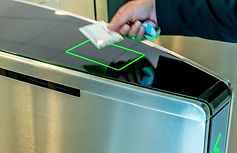


We design and install access control systems that support secure building entry, controlled access and practical day-to-day management of who can enter.
Commercial Access Control Systems and Secure Building Entry
Businesses often need a secure way to manage access to doors, entrances and restricted areas without relying on multiple keys. Electronic access control makes that process more manageable and more secure.
By replacing traditional key-only access with electronic credentials and controlled locking systems, businesses can improve building security and manage entry more efficiently.
Commercial Access Control Systems and Secure Building Entry
A typical access control installation includes the hardware and control points needed to manage building access securely.
✔ Keypad access systems for controlled door entry
✔ Electronic locking hardware integrated with door access systems
✔ Electric door locks and magnetic locking systems
✔ Access control software for user permissions and entry management
How Access Control and Door Entry Systems Work
Access control systems provide a more structured way to manage who can enter a building, which areas they can access, and how entry is controlled across the site.
✔ Secure access to restricted areas and internal zones
✔ Support for staff, contractors and approved visitors
.jpeg)
Book Your Access Control Installation
If you need access control systems in Lancashire, our engineers can help design and install a secure solution for authorised building entry. Contact us today to arrange a quote around Lancashire and nearby locations.

Supporting all
business across
the UK

Bespoke
Tailored Services

Access Control Systems Near You
Our engineers install access control systems in Lancashire for offices, warehouses, commercial buildings and other premises requiring controlled building access around Lancashire and nearby locations.
Systems can include keycard readers, fob access devices, keypad entry, electric door locks and other door access control equipment suited to the building.


Why Choose Winstanley for Electrical and Mechanical Services ?
Nationwide Coverage
Fully Trainied Experts
Fast Reponse

Available 24/7, 365 days a year

Bespoke Tailored Services

Competive Costs
Other Access Control Services Locations
Frequently Asked Questions (FAQs)
What faults commonly occur with Bosch CCTV systems?
Common Bosch CCTV faults include cameras going offline, recording failures, playback issues, storage drive problems, and remote viewing errors. In many cases the fault is linked to the recorder, storage hardware, power supply, or network communication rather than the camera itself. A proper diagnostic check usually confirms the failing part quickly.
Why are Bosch cameras showing as offline?
Offline Bosch cameras are usually caused by a network or power issue. This can include PoE faults, damaged data cables, switch failures, IP conflicts, or the recorder losing communication with the camera. Checking power delivery and the network path is normally the quickest way to identify and fix the issue.
What causes Bosch CCTV systems to stop recording?
Recording problems are often caused by hard drive faults, full or failing storage, incorrect recording schedules, or recorder configuration errors. If the system cannot write footage to storage correctly, recording may stop even though cameras still appear live. Checking storage health and recording settings usually resolves the problem.
Can Bosch CCTV playback issues be repaired?
Yes. Playback issues are often caused by storage faults, corrupted recordings, or configuration settings affecting how footage is saved and read back. Engineers usually check the recorder, storage health, and playback settings to restore reliable access to recorded footage.
Why is Bosch remote viewing not working?
Remote viewing problems are commonly linked to router or firewall changes, network configuration issues, account settings, or changes in app access. If secure remote settings have been interrupted, the system may stop connecting externally. Rechecking remote access and network configuration usually restores viewing.
Can Bosch PoE and network faults be fixed?
Yes. Many Bosch CCTV faults come from PoE switches, injectors, network hardware, or damaged cabling rather than the cameras themselves. Testing the PoE output and the network route usually identifies the failing point so camera communication can be restored.
Should I repair or replace a Bosch CCTV system?
Repair is usually the better option when the issue is limited to storage drives, network components, power supplies, or one part of the system. Replacement becomes more sensible if the hardware is ageing, faults are recurring, or multiple devices are failing at once. The decision should come down to cost, reliability, and how critical the system is to the site.
Can poor night footage or blurry Bosch CCTV images be improved?
Yes. Poor night footage is often caused by glare, weak lighting, incorrect positioning, or settings that affect exposure and infrared performance. Blurry images can come from focus problems, dirty lenses, vibration, or setup issues. Repositioning the camera, improving lighting, and adjusting settings can often make a noticeable difference.